
Why AfterDoula
The village has thinned.
A mother used to come home from a birth to a house full of hands. In 2021, one in five US adults lived within an hour's drive of no extended family at all.
The care on AfterDoula is for her first. Rested and nourished, she reads her baby, makes the calls for her household, and comes back to herself. This page shows what the published evidence says, with every source linked.
17%
of mothers of children three and under have no help beyond a partner
2.2 hours
a mother's longest unbroken sleep in week one, down from 5.6 before pregnancy
The village
Family is still there. It lives farther away.
Pew asked US adults in 2021 how much of their extended family lives within an hour's drive. A little over a quarter said all or most. One in five said none.
The West is the thinnest region: 46% of adults there live near at least some extended family, against 62% in the Northeast and Midwest. The share falls with education, to 42% among postgraduates. In Ada County, 54% of residents in 2024 had been born in another state.
What has changed most is who is in the house at night. Among fathers who take any leave after a birth, the median is one week, in Pew's 2016 survey. After a 2012 Swedish reform let fathers take days off in the first month, mothers were 12% less likely to need care for a complication of the birth.
The village that met a mother in 1985 kept different hours. The hospital kept her 3.8 days on average in 1980; by 1995 it was 2.1, and since 1996 federal law guarantees 48 hours. In 1985, half of mothers with a child under three were in the labor force; in 2025, 65% are. Her own mother is more likely to be working too: 61% of women aged 55 to 64 were in the labor force in 2025, against 45% in 1990, and 29% of grandparents live more than 50 miles from their nearest grandchild.
The honest number sits beside those: in 2015, the typical American adult lived 18 miles from their mother. The village has thinned. For most families it is still there, smaller, farther off, and busier than it was.

Mothers at work
Then and now. Grandmothers too.
- Then (1985 to 1990)
- Now (2025)
View as a table
| Category | Then (1985 to 1990) | Now (2025) |
|---|---|---|
| Mothers with a child under 3 | 49.5% | 65.0% |
| Women aged 55 to 64, a grandmother's age | 45.3% | 61.4% |
Sources: Bureau of Labor Statistics, The Economics Daily, 2007; Bureau of Labor Statistics, 2026; Bureau of Labor Statistics, Monthly Labor Review, 1999; Bureau of Labor Statistics, Current Population Survey table 3, 2026.
3.8 days
the average hospital stay for a birth in 1980. By 1995 it was 2.1, and federal law since 1996 guarantees 48 hours
29%
of grandparents live more than 50 miles from their nearest grandchild, up from 19% in 2011
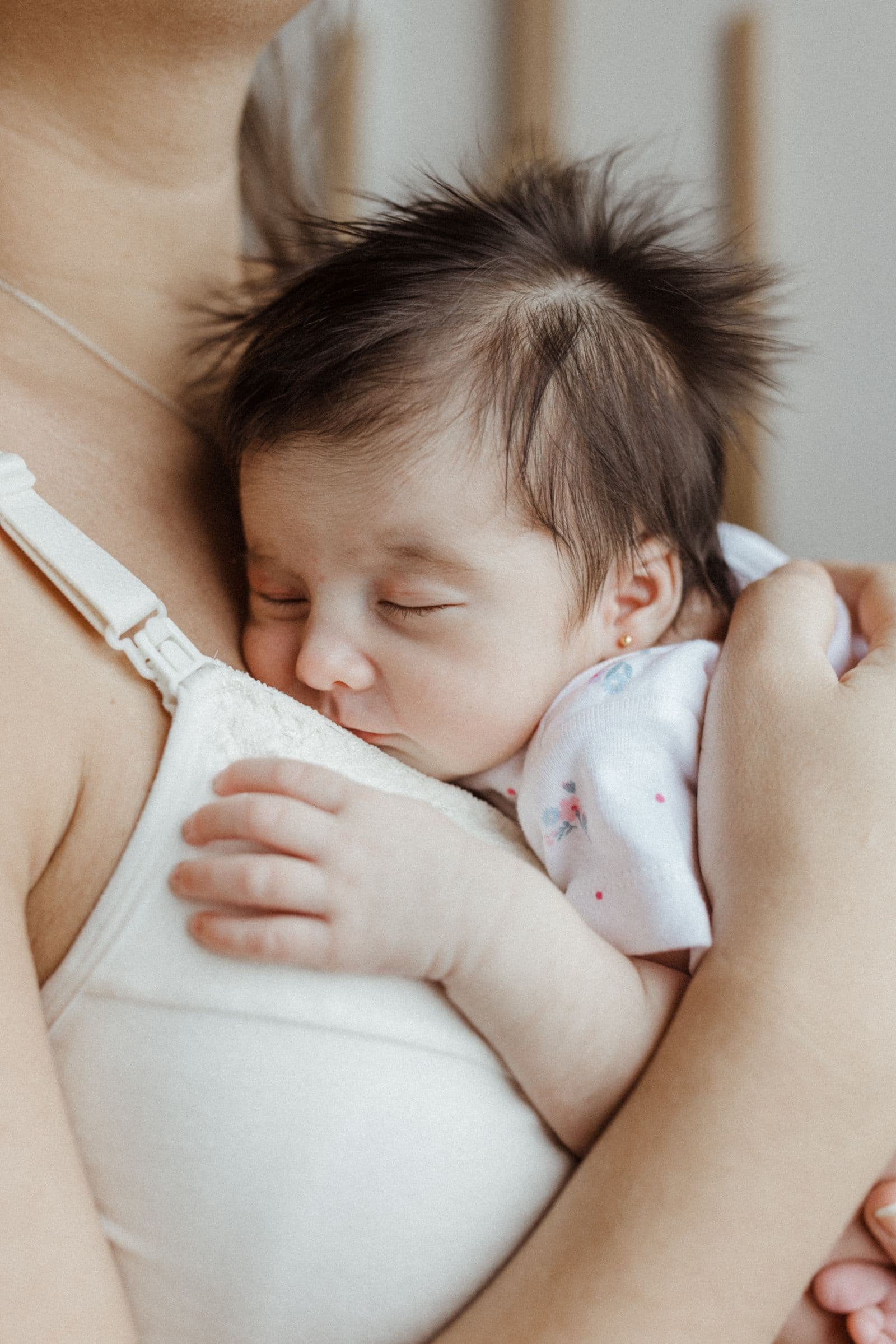
Rest
Total sleep comes back within two months. The longest stretch stays short.
A study presented in 2025 put wrist monitors on mothers after birth. Before pregnancy, their longest unbroken sleep averaged 5.6 hours. In week one it was 2.2 hours. By weeks 8 to 13, total sleep was back to 7.3 hours a day; the longest stretch was 4.1.
The short stretch is what costs her. In a 2013 study, mothers seven weeks after birth slept more than fathers, 413 minutes against 367, and still had nearly twice the attention lapses, 11.6 against 6.7, because 88 minutes of their night was spent awake in pieces. In a randomized trial, two weeks at six hours a night left adults as impaired on vigilance tests as two nights with no sleep, and they stopped feeling it: their own ratings of sleepiness flattened while their errors kept climbing.
Her thinking is intact. A cohort of 806 women followed for eight years found no change in memory or cognition from pregnancy or motherhood. What moves is sleep. A 2021 meta-analysis of 36,873 women found 3.3 times the odds of postpartum depression when sleep was disordered in pregnancy, and a 2025 review of randomized trials found that sleep interventions reduce the severity of depressive symptoms, with high certainty, and found no effect on whether depression develops at all.
How long a mother sleeps without waking up
Hours in a row, measured with wrist monitors. Before the baby, about five and a half. The first week, about two. Three months in, still only four.
View as a table
| Category | Hours of sleep in a row |
|---|---|
| Before the baby | 5.6 hours |
| The first week | 2.2 hours |
| Weeks 2 to 7 | 3.2 hours |
| Weeks 8 to 13 | 4.1 hours |
Source: SLEEP 2025 annual meeting abstract (wrist actigraphy), 2025.
88 minutes
of a mother's night spent awake, in pieces, seven weeks after birth, in a 2013 study of 21 couples
Insana and Montgomery-Downs, Developmental Psychobiology, 21 couples, 2013
11.6 lapses
of attention for a mother seven weeks after birth, against 6.7 for the father, in a 2013 study of 21 couples
Insana and Montgomery-Downs, Developmental Psychobiology, 21 couples, 2013
2 nights
of no sleep at all: what two weeks at six hours a night equalled on vigilance tests, in a randomized trial of 48 adults
Van Dongen, Maislin, Mullington, and Dinges, Sleep, randomized trial of 48 adults, 2003
Her judgment
Rested, she reads her baby.
Across the first year, mothers whose sleep was broken and irregular were less emotionally available at the baby's bedtime, and their babies were less securely attached at 12 and 18 months, in a 2022 study of 156 mothers wearing sleep monitors. Total hours did not predict it. The broken nights did. At 18 weeks, mothers with more interrupted sleep lost sensitivity across a ten-minute play session, after accounting for depression, the baby's mood, and income.
Two of the five studies on maternal sleep and sensitivity found no overall effect; the link appears when sleep is irregular, and in some mothers more than others. The nights are for her.
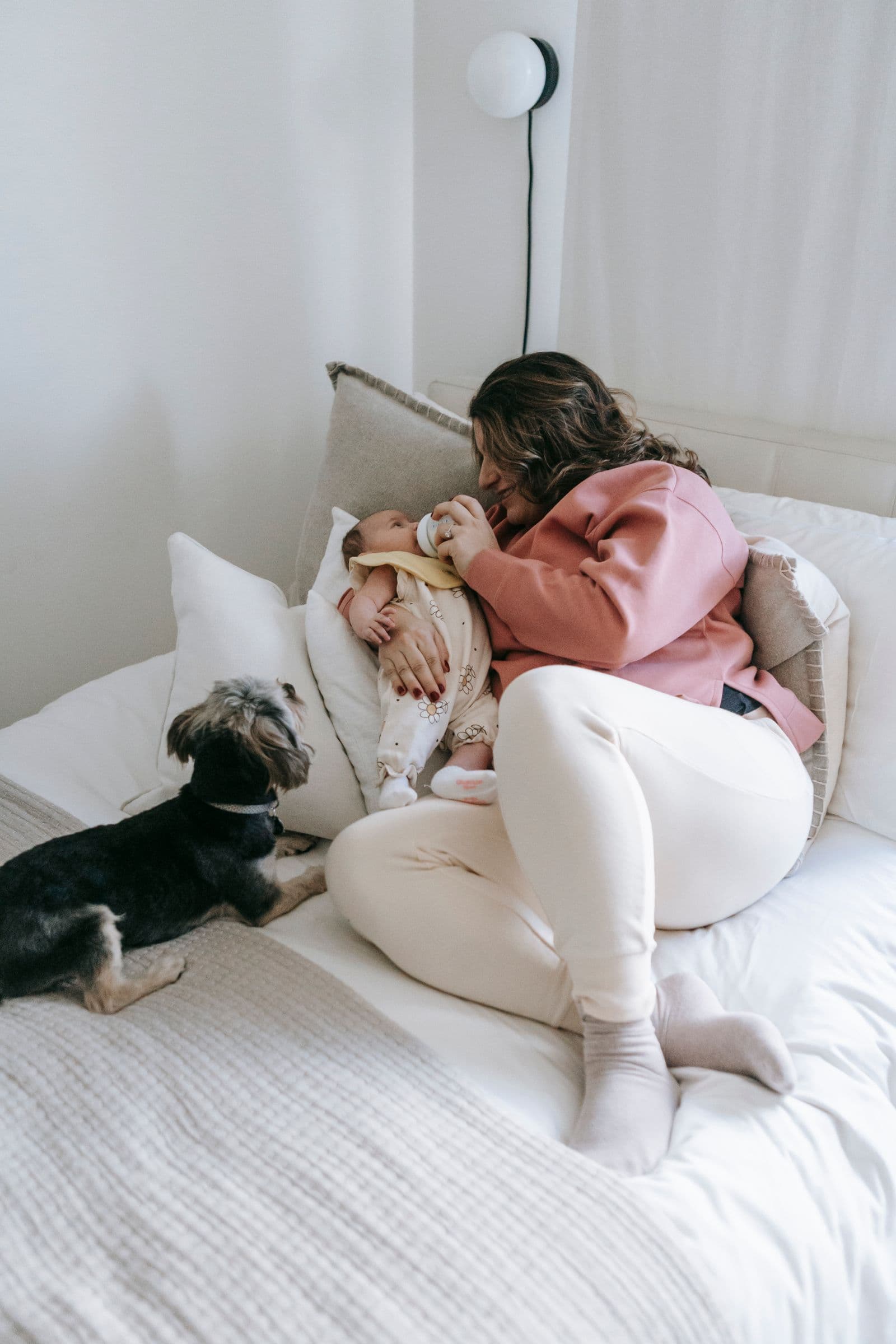
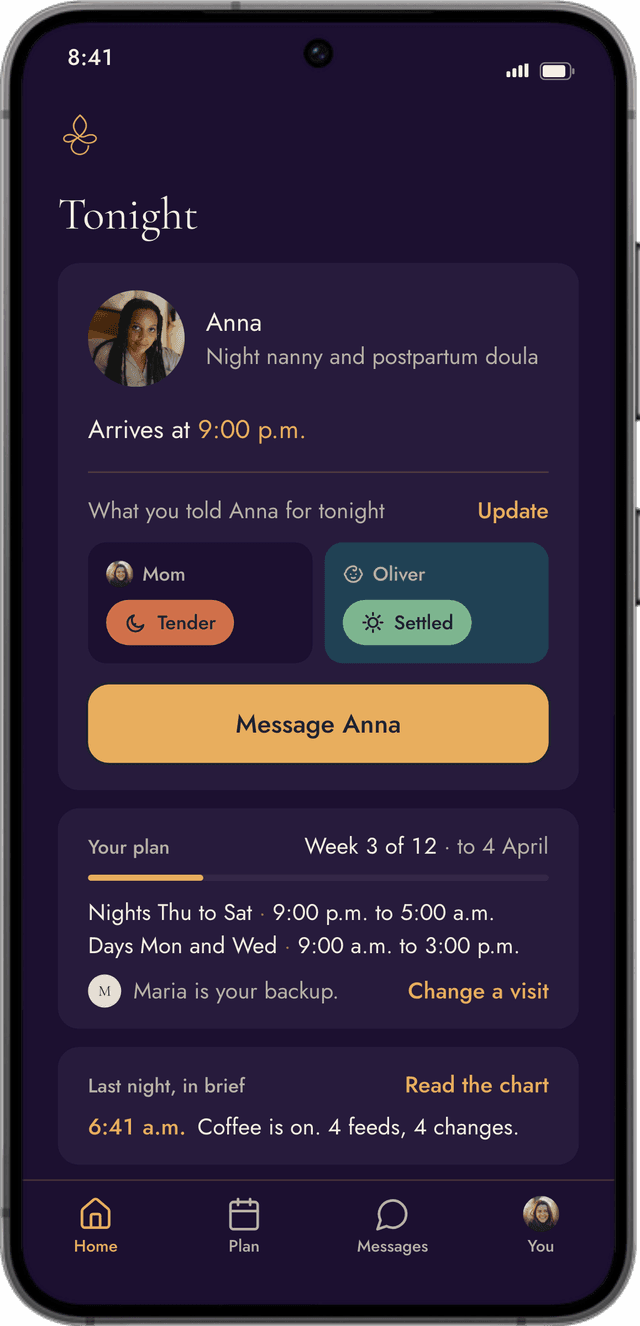
The AfterDoula app
We see the gap. We’re solving it.
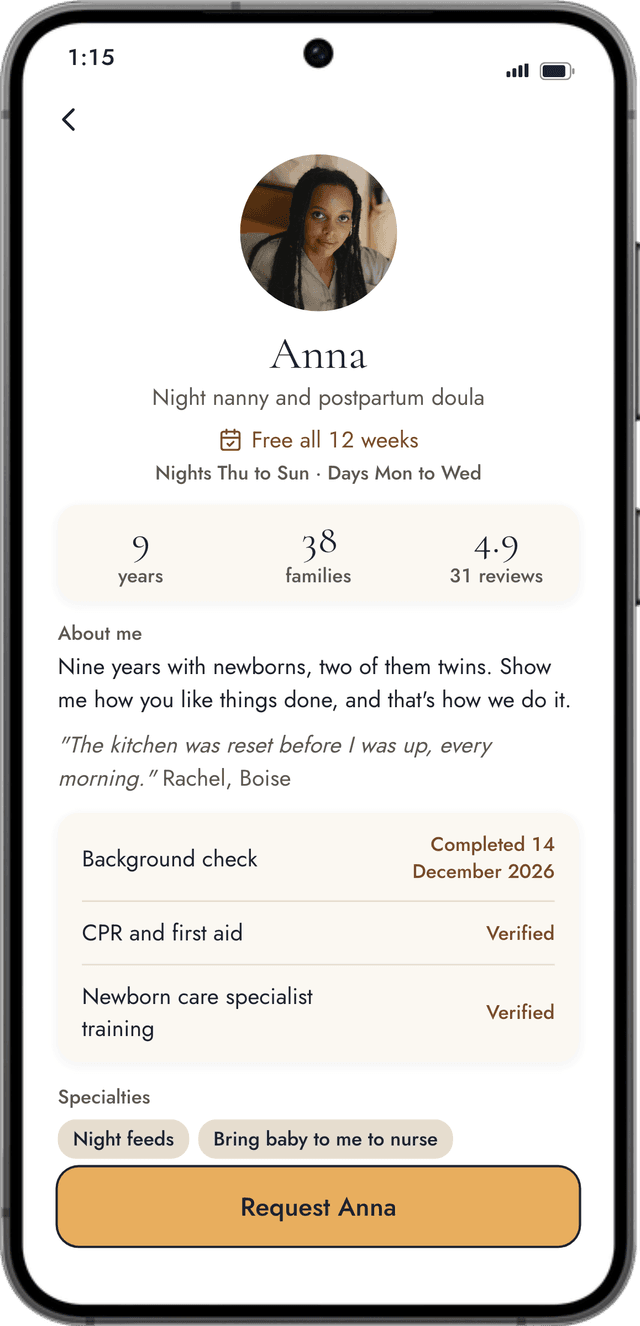
Pick a caregiver by the background check date, the CPR certification, and a meet before you book.

Nourishment
The meal is for her.
About half of women are anemic two days after a birth, in European series, and one US mother in eight was still iron deficient at six months in the last national survey to measure it. In a randomized trial of 81 iron-deficient mothers, treating the deficiency improved depression and stress scores by 25%. The meal is also the one that gets skipped: 28% of 420 North Carolina women skipped meals after birth, and those who did scored six points lower on diet quality. Mild dehydration, 1.4% of body weight, was enough to worsen mood, concentration, and fatigue in a crossover trial of young women.
Eating more has not been shown to make more milk. In the one trial that measured it, in The Gambia in 1983, raising mothers' calories by nearly half left milk volume unchanged, and a 2014 Cochrane review found the same for extra fluids. The meal is for her own iron, energy, and mood. A hot plate at the right hour is how she gets through the afternoon with a clear head.
Elsewhere, the first weeks are staffed as a matter of course. In the Netherlands, 95% of mothers surveyed from 2001 to 2011 had a trained maternity aide at home over the first 8 to 10 days, covered by insurance with a small hourly contribution. In Korea, 85.5% of mothers who gave birth in 2024 spent an average of 12.6 days in a postnatal care center. In China, about 98% of 542 mothers surveyed in 2016 observed confinement, most for a full month. The United States has no standard beyond a two-day hospital stay and a clinic contact within three weeks.
The outcome evidence for those systems is thin and mixed. They show what other countries treat as normal.
Days of help a new mother gets, by country
What most mothers get as a matter of course. In the Netherlands a trained helper comes to the house. In Korea mothers stay at a care center. In China, a month of rest at home. In the United States, nothing standard.
View as a table
| Category | Days of care |
|---|---|
| Netherlands | 8 to 10 days |
| Korea | 12.6 days |
| China | About 30 days |
| United States | No standard |
Sources: Statistics Netherlands (CBS), 2013; Zorginstituut Nederland, 2026; Korea Times, reporting the Ministry of Health and Welfare survey of 2024 births, 2025; Journal of Central South University Medical Sciences, 542 women surveyed in 2016, 2025; American College of Obstetricians and Gynecologists, 2018, reaffirmed 2025.
12.7%
of US mothers were iron deficient in the first six months after birth, in the 1988 to 1994 national survey
Bodnar, Cogswell, and Scanlon, Journal of Nutrition, NHANES 1988 to 1994, 2002
27.7%
of women skipped meals after birth, in a 2022 cohort of 420; their diet quality scored six points lower
Schwedhelm et al., Nutrients, Pregnancy Eating Attributes Study, 420 women, 2022
25%
improvement in depression and stress scores after iron treatment, in a 2005 randomized trial of 81 mothers
Beard et al., Journal of Nutrition, randomized trial of 81 mothers, 2005
Support
When a trained person shows up, outcomes move.
In a 2013 comparison of Medicaid births in Minnesota, 97.9% of mothers with a doula started breastfeeding, against 80.8% without. A 2022 Cochrane review of 116 trials found that breastfeeding support cut the share of mothers who stopped exclusive breastfeeding by 4 to 6 weeks by 17% (relative risk 0.83).
Support reaches mood too. In a 2009 randomized trial of 701 high-risk mothers in Ontario, peer support by telephone nearly halved depression at 12 weeks: 14% against 25%. In Durham, North Carolina, a randomized trial of a universal nurse home visit in the first weeks found a 30% lower likelihood of maternal depression or anxiety, half the infant emergency care in the first year, and $3.17 less in medical billing for every dollar the program cost.
Most mothers who stop breastfeeding stop before they wanted to: 60%, in a national study of 1,177 US mothers, and the reason they give most is that they believed they did not have enough milk. Depression and stopping predict each other, in almost every study a 2015 review found. Support in the first weeks is how she keeps her own plan, whichever plan it is.
Each of those studies names its own kind of support, and none tested a postpartum doula at night. The trials of postpartum doulas themselves are small: two studies, with 37 and 39 participants.

Mothers who breastfed, with a doula and without
Out of every 100 mothers on Medicaid in Minnesota, 2013. With a doula, almost all of them started.
- With a doula
- Without a doula
View as a table
| Category | With a doula | Without a doula |
|---|---|---|
| All mothers | 97.9% | 80.8% |
| African American mothers | 92.7% | 70.3% |
Source: Kozhimannil et al., Journal of Midwifery and Women's Health, 2013.
$3.17
less in medical billing for every dollar spent on a nurse home visit in the first weeks, over 24 months
116 trials
show breastfeeding support keeps more mothers breastfeeding at six weeks and six months

The gap
One Idaho mother in four, in the state's last survey.
About one US mother in eight reported postpartum depressive symptoms in 2023. Washington sat at 9.5% and Montana at 11.3%. Idaho's last reading was 25.4%, in 2021, with no later data.
Untreated perinatal mood and anxiety disorders cost about $32,000 per mother and child over five years, and $14.2 billion for one year of US births, those of 2017.
Against about 8,600 births a year in Ada and Canyon counties, DoulaMatch listed 28 postpartum doulas for all of Idaho on 2026-10-01.
Her recovery is the household's. Fathers' depression runs at 10% around a birth and 26% at three to six months, in a meta-analysis of 28,004 parents, and between 24% and 50% of fathers are depressed when the mother is. Among first-time fathers, half used paid leave and a third took none.
Recovery is measured in months. At five weeks, 64% of employed mothers reported fatigue; at eleven weeks, 43%. Of US mothers who went back to paid work, 49% were back by 12 weeks, the week the American College of Obstetricians and Gynecologists names for the final postpartum visit.
Mothers who felt depressed after birth, out of 100
The CDC's survey of new mothers. Idaho's last count was in 2021; the others are from 2023.
View as a table
| Category | Share of mothers |
|---|---|
| Idaho (2021) | 25.4% |
| United States (2023) | 11.9% |
| Montana (2023) | 11.3% |
| Washington (2023) | 9.5% |
$32,000
the cost of one untreated case of postpartum depression or anxiety, mother and child, over five years
Mathematica; Luca et al., American Journal of Public Health, 2019
26%
of fathers show depression three to six months after a birth, across 43 studies
Paulson and Bazemore, JAMA, 43 studies, 28,004 participants, 2010

Reading on your phone? We send the app link when Boise opens, January 2027.
Trained, checked, and priced
No state licenses care in a child's own home.
Idaho, Montana, and Washington each define licensed child care as care outside the child's home. A night nanny in your home sits outside licensing, and the statutory background check applies to facility staff only. Montana begins licensing doulas on 2027-01-01; whether that reaches a night nanny is unsettled.
Training matters because of what the infant death data show. From 2020 to 2024, about 3,400 sudden unexpected infant deaths happened in the US each year, and about three in four involved an unsafe sleep factor. In a study of 1,916 SIDS deaths in 11 states from 1995 to 1997, 20.4% happened in child care, against about 7% expected, and babies in child care were more often laid on the stomach when they were used to sleeping on the back. In a 2008 study of 1,212 child care providers, safe sleep training raised awareness of back sleeping from 59.7% to 80.5%.
A caregiver on AfterDoula costs from $50 an hour in Ada County, so a ten-hour night is from $500, with the background check date, CPR certification, and safe sleep training on the caregiver's profile. On 2026-09-30, Boise directories listed night nannies at $26 to $29 an hour and Care.com at $17. Montana's one night nanny agency starts at $45. In Seattle the directory median is $50 and agencies charge $45 to $85.

A background check before the first booking
With the date on the caregiver's profile. Every adult in your home overnight completes a check too.
Current pediatric CPR certification
Earned with a hands-on skills session and checked with the issuer.
Safe sleep training
Training in the American Academy of Pediatrics guidance: on his back, in his own bed, every sleep.
A meet and interview before you book
A phone or video call with the caregiver you pick, then you decide.

The founder
Kelsey
When Kelsey was four, someone asked her on stage what she wanted to be. She said, “a mommy.” She has been the mother hen of every friend group since. When her nephew was born in 2017, she started taking the nights for her sisters’ and friends’ newborns.
That year she named her three values: freedom, community, and curiosity. Her community was spread across the country, so she went to it. In 2020 she built out a camper van to park outside a mother’s house and help without being a burden. She arrives around 11 p.m., stocks the kitchen, and bakes lactation cookies. When the baby wakes, she brings the baby to mom to feed, then burps, changes, cuddles, and settles. Every three hours until morning. Mom wakes only to feed.
Nobody had to ask. One mother told her, “I was already thinking about how the dishwasher needed to be unloaded, and you had already done it.” When a friend’s milk supply dipped, the cookies were already baked. When she was hungry, there was soup in the freezer, made for her. Kelsey did not see, at the time, how closely that work matched the values she had named.
Since 2013 she has worked as a chief yacht stewardess, in homes where the highest standard meant anticipating a need before it was spoken. Nine years as a software developer gave her the systems thinking and the hands to build the app. That is how she reads a house: the yacht standard, and a developer’s eye for what breaks at 3 a.m. She reads a baby the way a mother hen does, having loved on her friends’ children for years. AfterDoula brings that standard home, and she builds the app herself, so a mother can come back to herself.
Kelsey, founder of AfterDoula
What it stands for
Her way.
The house runs by mom’s rules, written once in the House Brief and read by every caregiver.
Read the room.
The caregiver reads the House Brief and the tending card, keeps questions few, and checks in when the parents want.
A light presence, day or night.
The caregiver arrives without fuss, leaves each room as it was or better, and the app makes no sound.
Paid at the top.
Caregivers set their own rates, are paid weekly, and join free.
Both sides of the door.
Caregivers are background checked, and so is every adult in the home overnight.
Sources
Every study on this page.
Read 2026-10-01 and 2026-10-03. Each number above links to its study.
See the 60 studies
- More than half of Americans live within an hour of extended family. Pew Research Center, 2022.
- Americans widely support paid family and medical leave, but differ over specific policies. Pew Research Center, 2017.
- The typical American lives only 18 miles from mom. New York Times Upshot analysis of the Health and Retirement Study, republished by Boston.com, 2015.
- American Community Survey 2024, table B05002, Ada County. US Census Bureau via Census Reporter, 2024.
- When dad can stay home: fathers' workplace flexibility and maternal health. Persson and Rossin-Slater, NBER working paper, later American Economic Journal: Applied Economics, 2022.
- Study quantifies sleep loss and disruption experienced by new mothers. SLEEP 2025 annual meeting abstract (wrist actigraphy), 2025.
- Sleep disorders during pregnancy and postpartum depression: a systematic review and meta-analysis. International Journal of Developmental Neuroscience, 13 studies, 36,873 women, 2021.
- Impact of sleep on postpartum health outcomes: a systematic review and meta-analysis. British Journal of Sports Medicine, 60 studies, 20,684 women, 2025.
- Low income postpartum women are at risk of iron deficiency. Bodnar, Cogswell, and Scanlon, Journal of Nutrition, NHANES 1988 to 1994, 2002.
- Maternal iron deficiency anemia affects postpartum emotions and cognition. Beard et al., Journal of Nutrition, randomized trial of 81 mothers, 2005.
- Dietary supplementation of lactating Gambian women and milk output. Prentice et al., 130 women, 1983.
- Extra fluids for breastfeeding mothers for increasing milk production. Cochrane review CD008758, 2014.
- Autochtone moeders maken vaker gebruik van kraamzorg dan allochtone moeders. Statistics Netherlands (CBS), 2013.
- Kraamzorg (Zvw). Zorginstituut Nederland, 2026.
- Over 85% of Korean women turn to postpartum care centers. Korea Times, reporting the Ministry of Health and Welfare survey of 2024 births, 2025.
- Heterogeneity of Zuo Yuezi practices among Chinese postpartum women and its association with postpartum depression. Journal of Central South University Medical Sciences, 542 women surveyed in 2016, 2025.
- Optimizing postpartum care, Committee Opinion 736. American College of Obstetricians and Gynecologists, 2018, reaffirmed 2025.
- Doula care supports near-universal breastfeeding initiation among diverse, low-income women. Kozhimannil et al., Journal of Midwifery and Women's Health, 2013.
- Support for healthy breastfeeding mothers with healthy term babies. Gavine et al., Cochrane review CD001141, 116 trials, 2022.
- Effect of peer support on prevention of postnatal depression among high risk women: multisite randomised controlled trial. Dennis et al., BMJ, 701 women, 2009.
- Family Connects evidence: the Durham randomized trial. Dodge et al., Family Connects International, 2013 to 2024.
- Doula interventions, a systematic review of trials from 2000 to January 2026. PubMed Central, PMC13100869, 2026.
- Postpartum depression, CDC PRAMS data for the US, Idaho, Montana, and Washington. America's Health Rankings, 2023 (Idaho 2021).
- New study uncovers the heavy financial toll of untreated maternal mental health conditions. Mathematica; Luca et al., American Journal of Public Health, 2019.
- County population estimates, components of change, July 2023 to June 2024. US Census Bureau, 2024.
- Postpartum doulas in Idaho. DoulaMatch Idaho listings, read 2026-10-01.
- Idaho Code 39-1102, definitions for daycare licensing. Idaho Legislature, 2026.
- Montana Code Annotated 52-2-703, day-care facility definitions. Montana Legislature, 2025.
- RCW 43.216.010, child care definitions. Washington State Legislature, 2026.
- Characteristics of sudden unexpected infant deaths, SUID registry 2020 to 2024. CDC Morbidity and Mortality Weekly Report 75(35), 2026.
- Sudden infant death syndrome in child care settings. Moon, Patel, and Shaefer, Pediatrics, 1,916 deaths in 11 states, 2000.
- Reducing the risk of sudden infant death syndrome in child care and changing provider practices. Moon, Calabrese, and Aird, Pediatrics, 1,212 providers in four states, 2008.
- Night nannies in Boise. Bornbir listings, read 2026-09-30.
- Night nanny cost in Boise. Care.com, read 2026-09-30.
- Goodnight Baby services and rates. Goodnight Baby, Montana, read 2026-09-30.
- Night nannies in Seattle. Bornbir listings, read 2026-09-30.
- Hospital stays for childbirth, National Hospital Discharge Survey 1980 to 1997. CDC National Center for Health Statistics, 1999.
- Newborns' and Mothers' Health Protection Act fact sheet. Centers for Medicare and Medicaid Services, 1996.
- Labor force participation rate of women by age of youngest child, 1975 to 2006. Bureau of Labor Statistics, The Economics Daily, 2007.
- Employment characteristics of families, 2025. Bureau of Labor Statistics, 2026.
- Labor force participation: 75 years of change, 1950 to 98 and 1998 to 2025. Bureau of Labor Statistics, Monthly Labor Review, 1999.
- Employment status of the civilian noninstitutional population by age, sex, and race, 2025. Bureau of Labor Statistics, Current Population Survey table 3, 2026.
- New AARP research on grandparents busts stereotypes on attitudes, employment, finances, and lifestyle. AARP, survey of US grandparents in 2018, 2019.
- Sleep and sleepiness among first-time postpartum parents: a field- and laboratory-based multimethod assessment. Insana and Montgomery-Downs, Developmental Psychobiology, 21 couples, 2013.
- The cumulative cost of additional wakefulness: dose-response effects on neurobehavioral functions and sleep physiology from chronic sleep restriction and total sleep deprivation. Van Dongen, Maislin, Mullington, and Dinges, Sleep, randomized trial of 48 adults, 2003.
- Cognition in pregnancy and motherhood: prospective cohort study. Christensen, Leach, and Mackinnon, British Journal of Psychiatry, 806 women, 2010.
- Maternal nighttime sleep and infant-mother attachment security: the mediating role of maternal parenting quality during bedtime and free play. Bai, Kim, Crosby, and Teti, Developmental Psychology, 156 mother-infant pairs, 2022.
- Mothers' postpartum sleep disturbance is associated with the ability to sustain sensitivity toward infants. King, Rangel, Simpson, Tikotzky, and Manber, Sleep Medicine, 2020.
- Postpartum anemia I: definition, prevalence, causes, and consequences. Milman, Annals of Hematology, 2011.
- Eating patterns during pregnancy and postpartum and their association with diet quality and energy intake. Schwedhelm et al., Nutrients, Pregnancy Eating Attributes Study, 420 women, 2022.
- Mild dehydration affects mood in healthy young women. Armstrong et al., Journal of Nutrition, crossover trial of 25 women, 2012.
- Reasons for earlier than desired cessation of breastfeeding. Odom et al., Pediatrics, Infant Feeding Practices Study II, 1,177 mothers, 2013.
- Breastfeeding and depression: a systematic review of the literature. Dias and Figueiredo, Journal of Affective Disorders, 48 studies, 2015.
- Prenatal and postpartum depression in fathers and its association with maternal depression: a meta-analysis. Paulson and Bazemore, JAMA, 43 studies, 28,004 participants, 2010.
- Paternal postpartum depression, its relationship to maternal postpartum depression, and implications for family health. Goodman, Journal of Advanced Nursing, review of 20 studies, 2004.
- Parental leave and employment patterns for first-time parents in the United States: 2022. US Census Bureau, P70-204, 2025.
- Postpartum health of employed mothers 5 weeks after childbirth. McGovern et al., Annals of Family Medicine, 716 women, 2006.
- Mothers' health and work-related factors at 11 weeks postpartum. McGovern et al., Annals of Family Medicine, 661 women, 2007.
- Listening to Mothers III: New Mothers Speak Out. Declercq et al., Childbirth Connection, 2,400 US mothers, 2013.

The AfterDoula appBoise, January 2027
Be in the app the day Boise opens.
Leave your details and we send the download link, then match you with caregivers whose checks are complete.
Every caregiver on AfterDoula: a background check with the date on the profile, current pediatric CPR certification, safe sleep training, and a meet before you book.
Map © OpenStreetMap contributors